
What we can improve.
During your consultation, I will ask what concerns you: a hump in profile, a broad or drooping tip, a deviation or changes after an injury. We examine your nose from different angles and assess the skin, cartilage support and its relationship with the lips and chin.
Breathing is also part of the assessment. Obstruction can arise from the septum, nasal valves or other causes needing specific evaluation. If you have had previous surgery, we will review what was done and which tissues remain available. Photographs you like can help the discussion, but the aim is not to copy someone else's nose onto your face.
Options and scars.
The approach may be open or closed. In closed rhinoplasty, incisions remain inside the nose. An open approach adds a small incision in the columella—the skin between the nostrils—which usually becomes less noticeable as it matures. The choice depends on the changes and access we need, rather than one technique being better for every case.
The plan may include reshaping bone and cartilage, correcting the septum or strengthening certain areas with cartilage grafts. Skin thickness and the underlying structure influence how defined the tip can become. If a simulation is used, it helps clarify aims; it cannot show exactly how your tissues will heal.
What recovery involves.
The first few days
Congestion, swelling and bruising around the eyes are common during the first few days. We will advise you on cleaning, medication and resting with your head slightly elevated. An external splint, when used, usually stays in place for around a week; internal supports and stitches are removed according to the procedure.
Returning to your routine
Allowing one to two weeks before returning to a desk job or social activities is often helpful. Intense exercise usually waits around four to six weeks, and sports with a risk of impact require more caution. If you wear glasses, we will agree when they can rest on your nose; this should not be decided simply because discomfort has gone.
How the result develops
You begin to see the change when the splint is removed, but this is not the final result. Subtle swelling, especially at the tip, can last many months, sometimes more than a year, particularly with thick skin or previous surgery. Follow-up helps track this evolution without interpreting every early change as a problem.
Safety and possible risks.
Safety includes protecting the nose's support and assessing its function before changing its shape. Early congestion and swelling are different from breathing difficulty that persists or worsens, which needs review.
Bleeding, infection, irregularities or small differences between the sides can occur. An obstruction may remain and need treatment, or a later adjustment may be necessary once healing has stabilised. Less common risks, such as changes in smell or damage to the septum, will be discussed according to the planned work. The aim is for you to understand what to expect and which changes to report, with follow-up throughout recovery.
What we will discuss.
- Which changes you want and which features you wish to preserve.
- How you breathe and whether you have had injuries or previous surgery.
- Which approach and scars your case requires.
- How to adapt glasses, work and sport during recovery.
Frequently asked questions.
Open or closed: which is right for me?
The approach that allows the necessary changes while maintaining good control of the structure. Closed access is sufficient in some cases; others benefit from the exposure of an open approach. I will explain the reason for the choice in your case.
Will I breathe better?
If there is a structural problem we can correct, it can be included in the plan. Congestion from allergies or other causes is not always resolved by rhinoplasty and may need different treatment.
Will my nose look exactly like the simulation?
A simulation can help agree on aims, but does not predict exactly how the skin and tissues will respond. Planning is based on achievable anatomical changes and how they develop in practice.
Why is the tip still swollen when I am back to normal life?
Returning to your routine and the swelling fully settling are different processes. The tip usually becomes defined more slowly than the rest of the nose, so it is assessed over several months.
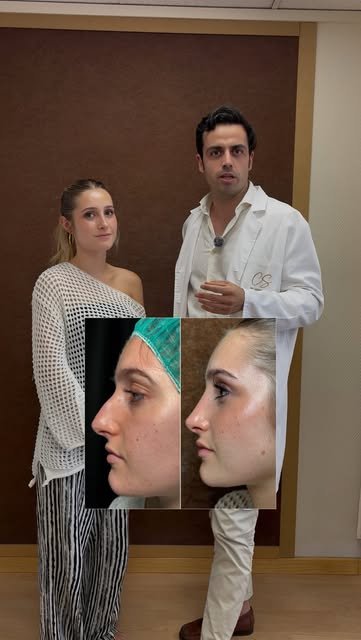
Published case · 3 months
Closed rhinoplasty.
My own publication showing progress at three months. This is an individual case and does not predict someone else's result.
Watch the original video ↗Keep exploring.
Questions from consultation.
Revisión inicial del contenido: Dr. Luis Martín Suárez · 2026-09-13
Timeframes are a guide. The technique, suitability and aftercare are agreed during consultation according to your case and progress.